Skip to content
If your shower glass keeps spotting, your dishwasher leaves a film, and your skin feels dry after bathing, the question usually comes fast: does a whole house water filtration system soften water? In most homes, the answer is no. A whole house filtration system and a water softener solve different problems, and mixing them up is one of the biggest reasons homeowners end up with water that is cleaner but still hard.
That matters because hard water does not just affect how water looks. It can shorten the life of appliances, leave scale inside pipes, make soap work poorly, and create constant cleanup around sinks, faucets, and fixtures. A filter may improve taste, odor, or sediment issues, but it usually will not remove the hardness minerals causing those headaches.
Table of Contents
ToggleDoes a whole house water filtration system soften water?
Usually, no. A whole house water filtration system is designed to remove contaminants such as chlorine, sediment, iron, sulfur odor, or other unwanted materials depending on the media inside the tank. Softening water is a separate process aimed at reducing calcium and magnesium, which are the minerals responsible for hard water scale.
So if your goal is softer skin, less spotting on dishes, better soap lather, and protection for your water heater and plumbing, a standard whole house filter alone is not the fix. You need a true softening system or a conditioning system designed for hardness control.
This is where many homeowners get tripped up. The term whole house system sounds like it should do everything, but water treatment works best when the equipment is matched to the actual water issue. A sediment filter handles grit. A carbon filter handles chlorine and some odors. A softener handles hardness. A UV system handles bacteria. One tank does not automatically do all of it.
What a whole house filtration system actually does
Whole house filtration systems treat the water entering your home before it reaches showers, sinks, laundry, and appliances. That is why they are popular with both city water and well water properties. The exact result depends on the type of system installed.
A carbon-based whole house filter is often used on municipal water to reduce chlorine taste and odor. That can make showers more pleasant, improve drinking water quality at every tap, and reduce the chemical smell many families notice first.
A sediment system is common where water carries sand, silt, or rust particles. This protects fixtures and keeps debris from building up in valves, screens, and appliances.
Specialized backwashing filters can also target iron, manganese, or sulfur odor. Those systems are common on well water properties where staining, rotten egg smell, or discoloration are the bigger complaints.
All of that can make water noticeably better. But none of those functions automatically remove hardness. If the water still contains calcium and magnesium, it is still hard.
What a water softener does that a filter does not
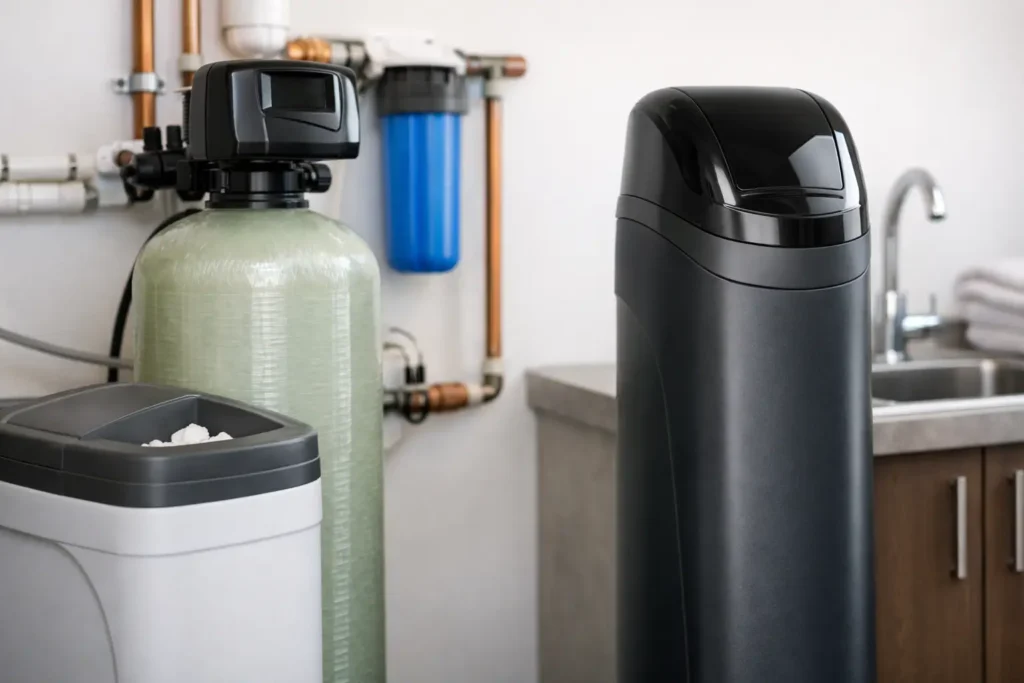
A water softener is built specifically to remove hardness minerals. Most traditional softeners do this through ion exchange. In plain terms, the system captures calcium and magnesium and replaces them with sodium or potassium. That is what reduces scale buildup and changes how water feels in daily use.
You notice the difference quickly. Soap rinses better. Hair feels less dry. Glassware comes out cleaner. Fixtures stay brighter longer. More importantly, the inside of your plumbing system and water-using appliances stay cleaner too.
For many homes, that appliance protection is the biggest financial benefit. Hard water scale can build up inside water heaters, dishwashers, washing machines, and even on heating elements. Over time, efficiency drops and maintenance costs rise.
A filter cannot usually do that job. It can improve water quality in other ways, but it does not replace a softener when hardness is the main problem.
When people think filtration is softening
There are a few reasons the confusion happens.
First, some homeowners install a whole house chlorine filter and notice their water feels better on skin and hair. That is real, but it is not the same as soft water. Chlorine reduction can make water feel less harsh, even if hardness is unchanged.
Second, some systems are sold as all-in-one solutions. In some cases, they do combine multiple treatment stages, but that does not mean every package includes actual softening. You still need to check whether hardness reduction is part of the design.
Third, salt-free systems are often grouped into the same conversation. These systems generally do not remove hardness minerals in the same way a traditional softener does. Instead, they help reduce scale formation. For some homes, that is a good fit. For others, especially where water is very hard, it may not deliver the same results homeowners expect from a true softener.
Which setup is right for your home?
It depends on what is in your water and what problems you want solved.
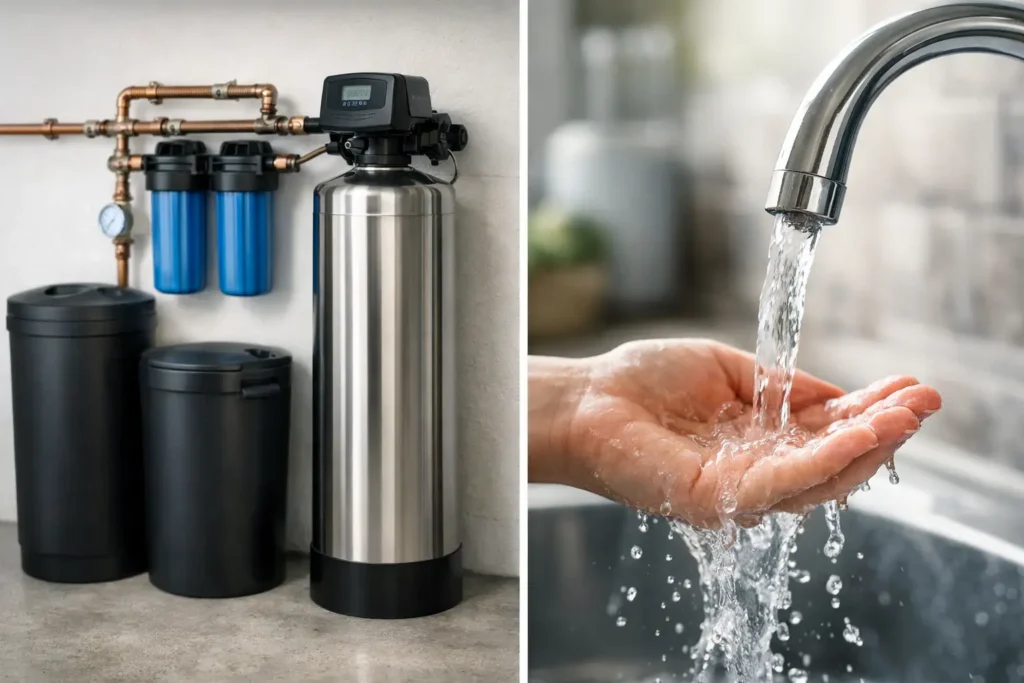
If you are on city water and your biggest complaints are chlorine smell, dry skin, and scale on fixtures, a combination of carbon filtration and water softening is often the right setup. The filter handles chlorine while the softener handles hardness.
If you are on well water, the picture can be more complicated. You may be dealing with hardness plus iron, manganese, sulfur odor, sediment, or bacteria risk. In that case, a single product rarely covers everything well. Layered treatment is more common, such as sediment prefiltration, iron or sulfur treatment, softening, and possibly UV disinfection.
That is why water testing matters. You do not want to buy equipment based on guesswork, especially if your water source is a well or acreage property. The right system starts with identifying the actual issue, not just the symptom.
Does a whole house water filtration system soften water on well water?
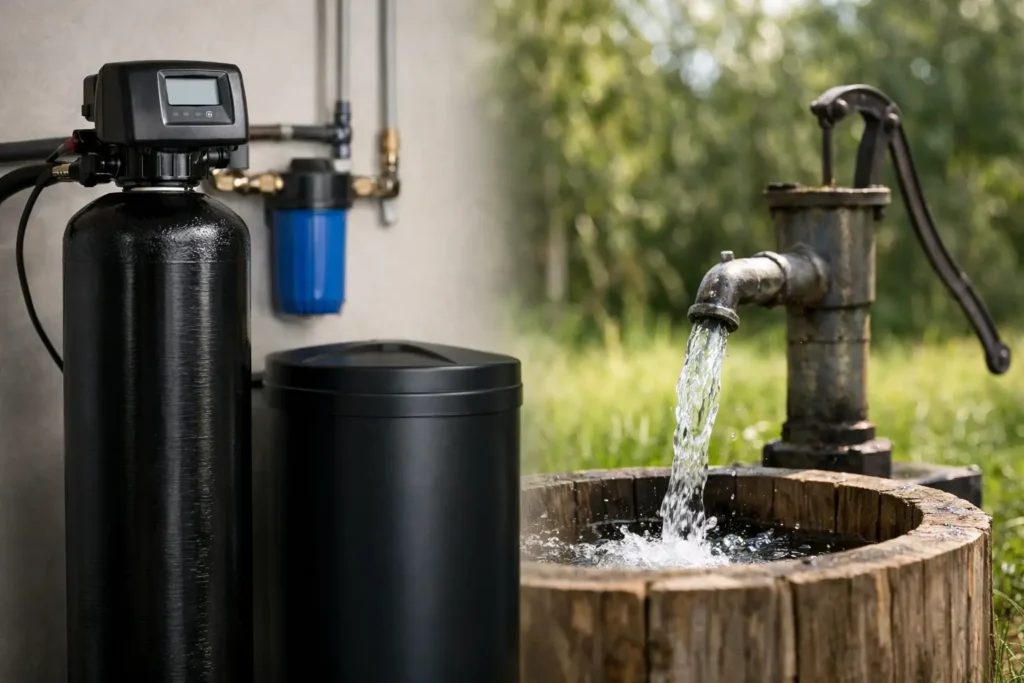
The answer is still usually no, but well water adds another layer. Some well water filters are designed to remove iron or manganese, which can improve staining and water appearance so much that people assume the water has also been softened. It has not, unless the system specifically includes hardness treatment.
This matters because iron and hardness often show up together. You might solve orange staining with one filter and still have white scale around taps. That is not a system failure. It just means you are treating one water problem and not the other yet.
For rural properties, customized treatment is often the better route than buying a generic package. Water conditions can vary a lot from one property to the next, even within the same area.
The trade-off between softeners and salt-free conditioners
Some homeowners want hardness control without salt, maintenance, or regeneration cycles. That is where salt-free conditioners come into the conversation.
These systems can help reduce scale buildup, and they are appealing for households that want lower maintenance. But they do not usually deliver the same classic soft water feel as a traditional ion-exchange softener. If your top priorities are silky-feeling water, easier soap lather, and maximum hardness removal, a standard softener is still the stronger performer.
If your goal is scale reduction with fewer moving parts, a conditioner may be enough. It comes down to expectations and water chemistry.
The smartest way to shop for water treatment
Do not shop by product name alone. Shop by problem.
If your issue is hardness, ask specifically whether the system removes calcium and magnesium. If your issue is chlorine, ask what media is being used and what flow rate the filter can handle. If you are on well water, ask whether the quote addresses sediment, iron, sulfur, bacteria, and hardness separately.
That approach prevents overbuying in one area and under-treating in another. It also helps you compare installed packages more clearly, especially when one company is quoting a filter and another is quoting a full treatment system.
For homeowners around Red Deer, this is especially useful because local water conditions can vary between municipal supply and rural wells. A company that starts with testing and matches the system to your source water will usually save you time and frustration compared with a one-size-fits-all recommendation.
If you are asking whether a whole house filtration system will soften water, you are already asking the right question. The next step is making sure the system you choose is built for the result you actually want – cleaner water, softer water, or both. When the equipment matches the problem, the difference shows up everywhere from your shower door to your utility bills.