Skip to content
If you’ve priced a basic softener online and then talked to an installer for your acreage or rural home, you’ve probably noticed a big gap. That gap is exactly why well water softener system cost can be confusing. With well water, you’re rarely paying for one box. You’re paying for a solution that matches hardness, iron, manganese, sulfur odor, sediment, and sometimes bacteria.
For many homeowners, the real question is not whether a system costs $1,500 or $5,000. It’s whether the system actually fixes orange staining, rotten egg smell, scale buildup, and appliance wear without constant service calls. A cheap setup can look good upfront and turn expensive fast if it is undersized or misses a water issue that should have been treated from day one.
Table of Contents
ToggleWhat well water softener system cost usually includes
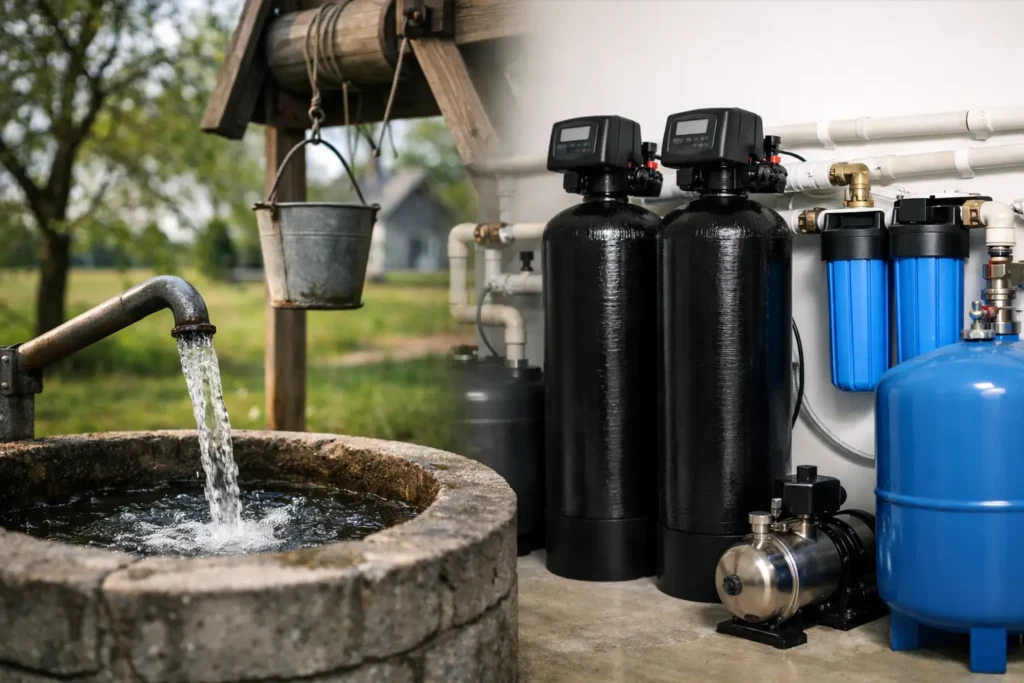
A true well water package often includes more than a softener. The softener handles hardness minerals like calcium and magnesium, but well water frequently brings other contaminants with it. If iron or manganese is present, a softener alone may struggle or foul prematurely. If sulfur odor or bacteria is part of the picture, extra treatment stages may be needed.
That means the full installed price can include the equipment itself, control valve, resin tank, brine tank, pre-filtration, iron or sulfur treatment, UV disinfection, installation labor, fittings, bypass valves, startup, and water testing. In other words, the number that matters most is the installed system cost for your water profile, not the sticker price of a standalone unit.
In practical terms, many rural homeowners land somewhere between a basic softener package and a more complete multi-stage setup. A simple softener-only installation may be enough for mildly hard well water with no staining or odor. But once iron, sediment, or bacteria enter the conversation, the budget usually moves up.
Typical price ranges for a well water setup
A basic installed softener for well water can start around $1,500 to $2,500 when the water is mostly just hard and the plumbing setup is straightforward. This is the lower end, and it only makes sense when testing confirms there are no major iron, sulfur, or bacterial concerns.
A more common range for a well water home is about $2,500 to $4,500. This often covers a properly sized softener plus some level of pre-treatment, especially where sediment or light iron is present. For many families, this is the range where the system starts to feel complete rather than minimal.
If your well water has heavier iron, manganese, sulfur odor, or requires UV disinfection, a full package can run $4,500 to $8,000 or more installed. Larger homes, higher flow demands, and more complex plumbing can push the price higher. Commercial or high-capacity applications can go beyond that quickly.
Those numbers are broad on purpose. The right price depends on what your water test shows and how much water your household uses. Two homes on neighboring properties can have very different treatment needs.
Why well water costs more than city water treatment
The biggest reason is complexity. City water is generally disinfected and more predictable, even if it still has hardness or chlorine. Well water is private source water, which means the treatment system has to deal with whatever comes out of the ground on that property.
That creates more moving parts in the buying decision. One home may only need hardness treatment. Another may need sediment removal, iron filtration, softening, carbon treatment, and UV. If you skip those extra stages when they are needed, the softener can suffer and the water problems may never fully go away.
Installation can also be more involved on rural properties. Pressure tanks, pump setups, drain access, and space limitations all affect labor. A system that looks simple on paper may require additional plumbing work to install correctly and make maintenance easier later.
The biggest cost drivers to watch
Water chemistry
This is the number one factor. Hardness level matters, but iron, manganese, tannins, sulfur, low pH, and bacteria matter just as much. A softener is great at softening water. It is not a cure-all for every well water problem.
System size
A small home with one bathroom does not need the same capacity as a large family home with multiple bathrooms, a large tub, and heavy laundry use. Bigger systems cost more, but undersizing is a mistake that leads to poor performance and more frequent regeneration.
Extra treatment stages
If the home needs an iron filter, sulfur treatment, sediment pre-filter, carbon tank, or UV disinfection, the total package price rises. This is often where online product comparisons fall apart. Many low advertised prices leave out the equipment that well water actually needs.
Installation conditions
If the install area is tight, outdated, far from drainage, or needs electrical or plumbing adjustments, labor costs can increase. Straightforward installs are cheaper. Rural homes with custom plumbing layouts often take more time.
Ongoing operating costs
Salt, filter replacements, UV lamps, maintenance, and occasional service should be part of your budget. A lower upfront cost does not always mean lower ownership cost over five or ten years.
Softener only vs. full well water package
This is where many homeowners save or waste the most money.
A softener-only system is usually the right choice when testing shows hard water with little or no iron, no sulfur smell, no bacteria concerns, and manageable sediment. In that case, keeping the system simple makes sense.
A full well water package makes more sense when there are multiple issues happening at once. If you have scale on fixtures, orange staining in tubs, black staining around drains, cloudy water after heavy use, or a rotten egg smell, a softener by itself is probably not enough. Adding the right pre-treatment protects the softener and gives better results throughout the house.
This is also why transparent quotes matter. A low quote for a single unit may not be comparable to a higher quote that includes filtration, UV, installation, and startup. They solve different problems.
How to compare quotes without getting burned
Start with water testing. If the quote is not based on actual well water results, it is mostly guesswork. You want to know hardness, iron, manganese, sulfur, sediment load, and whether bacteria testing is recommended.
Then look at what is included. Is installation built into the price? Are bypass valves, hookups, programming, and startup included? Is there a warranty on parts and labor? Does the quote include the systems needed to treat all known issues, or only hardness?
Flow rate matters too. A cheap system that cannot keep up with your home will feel like a bargain for about two weeks. After that, you are dealing with pressure drop, poor treatment, or premature wear.
It also helps to ask what maintenance will look like in year one and year five. A properly matched system should make life easier, not create a long list of headaches.
Is financing worth it for a well water system?
For many homeowners, yes. When a system protects plumbing, reduces staining, improves water quality, and helps appliances last longer, waiting can be costly. Financing can make a complete solution possible right away rather than piecing together temporary fixes.
The key is to finance the right system, not just the cheapest monthly payment. A complete setup that actually solves the problem usually offers better value than replacing low-end equipment later. For households balancing budget and urgency, 0% interest plans can make a professionally installed package much easier to manage.
What a smart buyer should expect
A good installer should make the buying process simple. That means clear package options, plain-English explanations, water testing, and pricing that reflects the real scope of work. If you are hearing a lot of vague promises and not much detail about your water, that is a red flag.
For rural properties around Red Deer, local water conditions matter. Well water can vary widely from one area to the next, so local experience helps when choosing between a standard softener and a more complete treatment package. Companies like Water Softener Red Deer focus on matching the system to the source water, which is exactly how you avoid overspending on the wrong equipment.
The best well water system is not the one with the lowest upfront number. It is the one that fits your water, your home, and your daily use. If the quote is based on testing, sized correctly, and includes installation, you are much more likely to get water that feels better, smells cleaner, and stops punishing your fixtures and appliances every day.